
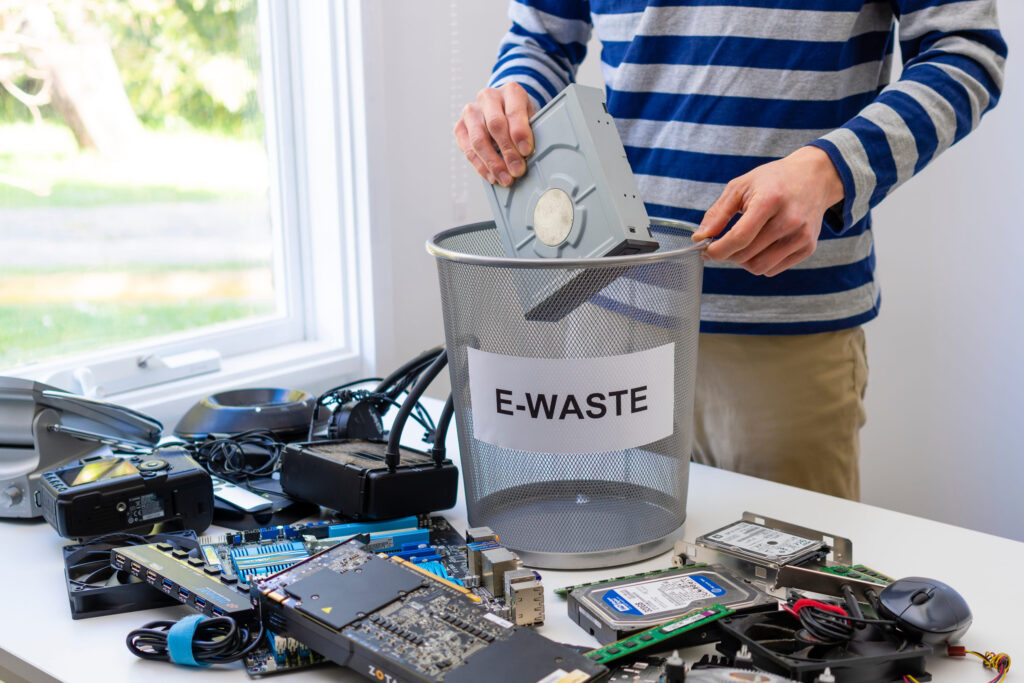
For producers and importers of electrical and electronic equipment (EEE) in South Africa, the regulatory landscape has shifted from “voluntary” to “mandatory.” Under the National Environmental Management: Waste Act (NEMWA), Extended Producer Responsibility (EPR) is now a cornerstone of corporate legality. As we move into 2026, the focus has intensified on measurable collection targets and transparent reporting, leaving no room for administrative oversight.
What is EPR and Why Does it Matter Now?
Extended Producer Responsibility (EPR) shifts the physical and financial burden of a product’s end-of-life management from the municipality to the producer. In simpler terms, if you put electronics into the South African market, you are legally responsible for ensuring they do not end up in a landfill.
Non-compliance is no longer just an environmental concern—it is a significant financial and legal risk. Failure to meet annual collection targets or provide accurate data to the Department of Forestry, Fisheries and the Environment (DFFE) can result in heavy penalties and reputational damage. Integrating professional e-waste services and solutions into your supply chain is the only way to ensure these obligations are met.
The 2026 Compliance Checklist
To maintain a compliant status, producers must focus on three critical pillars of the EPR framework:
- Accurate POM Data: Precise recording of “Put on Market” (POM) volumes is the baseline for all targets.
- Verified Collection Channels: Ensuring that e-waste is collected via legally compliant channels and not through informal, unregulated scrap dealers.
- Certified Recycling Proof: Maintaining a paper trail of “Certificates of Destruction” and recycling reports that prove the waste was handled according to national standards.
Leveraging sustainable technology and innovation allows companies to track these metrics in real-time, turning a regulatory burden into a streamlined operational process.
Moving Beyond Compliance to Circularity
While the immediate goal is to avoid fines, the most successful companies are using EPR as a catalyst for a circular economy. By designing for durability and implementing robust “take-back” schemes, brands can recapture valuable materials and strengthen customer loyalty.
At eWaste Africa, our approach to circular economy focuses on maximizing resource recovery while minimizing environmental footprints. We help producers navigate the complexities of the law by providing certified e-waste recycling that satisfies all government audits.
Compliance is not a one-time event; it is a continuous operational requirement.
If you are unsure of your current standing or need to optimize your 2026 reporting, we recommend you speak with an e-waste compliance expert today. For a deeper dive into our processes, feel free to explore our certification and standards or request an EPR audit to identify gaps in your current strategy.
Stay updated on the shifting legal landscape by visiting our latest e-waste industry news section.