
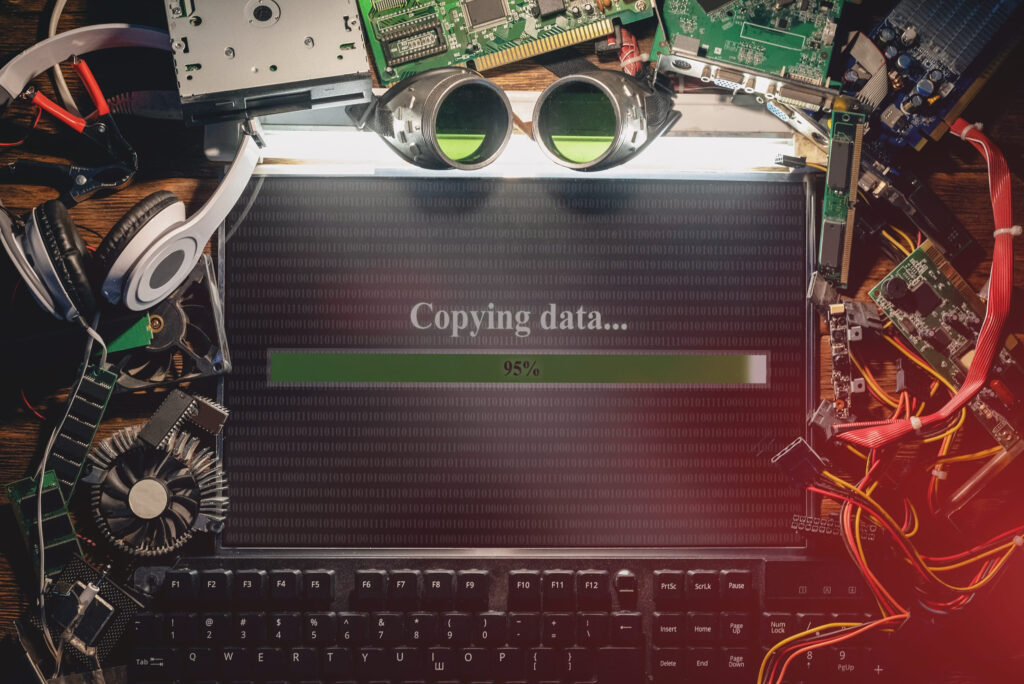
In an era of sophisticated cyber-attacks and stringent privacy laws, the “delete” key is an illusion. For South African businesses, the Protection of Personal Information Act (POPIA) mandates that personal data be destroyed or de-identified as soon as it is no longer necessary for the purpose for which it was collected. However, many organizations make the critical mistake of assuming that factory resets or software wipes are sufficient for old hard drives, servers, and mobile devices.
The Fallacy of Software Wiping
Software-based data erasure can be effective, but it is prone to human error and software failure. Bad sectors on a hard drive may remain un-wiped, and sophisticated data recovery tools can often retrieve “deleted” information from decommissioned hardware. This creates a massive vulnerability: a discarded laptop or server sold to a third party could become the source of a catastrophic corporate data breach.
To truly guarantee that sensitive client data, financial records, and proprietary IP are gone, businesses must move toward secure e-waste disposal services that prioritize physical destruction.
Physical Destruction: The Gold Standard of Security
Physical destruction—specifically shredding and crushing—renders the storage medium physically impossible to reconstruct. This is the only method that provides 100% certainty and satisfies the strictest interpretations of POPIA.
- Hard Drive Shredding: Reducing disks to small fragments to ensure no platter can be read.
- Circuit Board Destruction: Preventing the recovery of data from flash memory chips and ROMs.
- Certified Chain of Custody: Ensuring the asset is tracked from the moment it leaves your office until the moment it is destroyed.
By utilizing advanced destruction technology, eWaste Africa ensures that your decommissioned hardware does not become a legal liability.
Integrating Security into your Asset Lifecycle
Data security should not be an afterthought at the end of a hardware’s life; it should be integrated into the entire asset lifecycle. A professional disposal strategy includes a detailed inventory of every serial number and a corresponding Certificate of Destruction (CoD).
This documentation is your primary defense during a POPIA audit. It proves that the organization took “reasonable technical and organizational measures” to secure personal information. You can learn more about our data security protocols and our commitment to confidentiality to see how we safeguard your corporate reputation.
A single lost hard drive can lead to millions in fines and a permanent loss of client trust.
Don’t leave your security to chance. Whether you have a single server or a warehouse of legacy hardware, you can book a secure destruction pickup today. For organizations requiring a comprehensive review of their hardware exit strategy, we recommend you request a security audit. For more information on evolving threats, check our data security insights or explore our certified asset disposal workflows.